☁️ The Rise of AI-Powered Cloud Operations (AIOps & AgentOps)
“Smarter Clouds. Autonomous Systems. Limitless Efficiency.”
The cloud has revolutionized how businesses build, scale, and deploy software — but managing it efficiently has always been complex.
From monitoring servers to predicting failures, the growing volume of cloud data and dependencies has outpaced traditional tools.
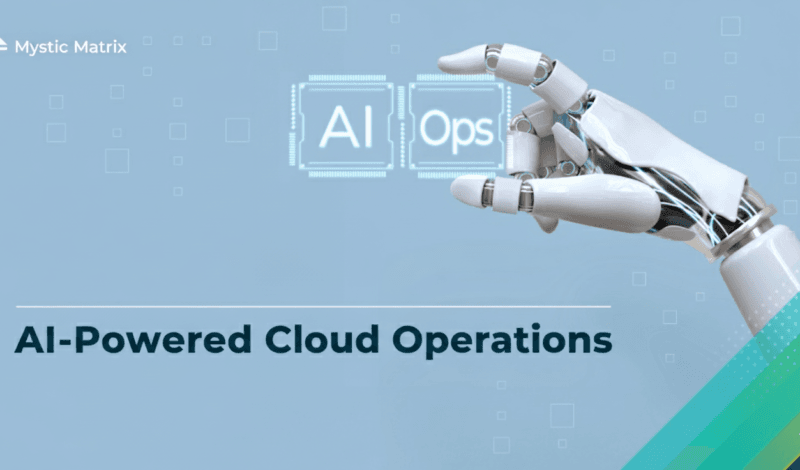
Enter AI-powered Cloud Operations, better known as AIOps (Artificial Intelligence for IT Operations) and its emerging evolution, AgentOps — a system where autonomous AI agents manage and optimize cloud environments with minimal human intervention.
By 2025, these technologies are not just trends — they’re reshaping how IT teams, developers, and businesses operate in the cloud.
🧠 What Are AIOps and AgentOps?
At its core, AIOps (Artificial Intelligence for IT Operations) uses machine learning and big data analytics to automate and improve IT operations. It analyzes real-time data from servers, applications, and networks to detect anomalies, predict issues, and resolve them automatically.
AgentOps, on the other hand, takes automation to the next level — using autonomous AI agents capable of learning, acting, and collaborating across systems. These agents don’t just monitor; they make decisions — restarting services, scaling servers, or even communicating with other AI agents to solve complex issues.
💡 Think of AIOps as your smart monitoring system and AgentOps as your intelligent co-worker managing the entire cloud for you.
⚙️ AI-Powered DevOps: Automating CI/CD Pipelines
AI-powered DevOps changes that — fusing automation, analytics, and machine learning to create CI/CD pipelines that think, learn, and self-optimize.
👉 Learn More⚙️ How AIOps & AgentOps Work Together
Behind every high-performing, resilient cloud infrastructure lies a seamless collaboration between AIOps (Artificial Intelligence for IT Operations) and AgentOps (Autonomous Agent Operations).
Together, they create an intelligent ecosystem that continuously monitors, learns, and acts — ensuring systems stay stable, optimized, and secure without constant human oversight.
At the foundation, AIOps functions as the brain of the operation. It gathers enormous volumes of data from every part of the infrastructure — including system logs, application performance metrics, error reports, and network telemetry. This data is then fed into machine learning models trained to detect patterns, predict failures, and highlight performance bottlenecks before they escalate.
For instance, AIOps can analyze CPU usage, memory allocation, and traffic trends to identify unusual spikes or slowdowns. It doesn’t just report problems — it understands why they might be happening. By leveraging advanced anomaly detection algorithms, it can differentiate between normal fluctuations and real issues that need intervention.
Once AIOps identifies an issue or optimization opportunity, AgentOps takes over as the hands and instincts of the system.
AgentOps deploys autonomous agents — intelligent software entities that can take direct actions based on AIOps insights. These agents don’t simply execute fixed rules; they reason contextually and act dynamically.
If a sudden traffic surge hits your web application, for example:
- AIOps instantly recognizes the anomaly and predicts a potential performance dip.
- AgentOps responds in milliseconds — provisioning additional cloud instances, rebalancing workloads across regions, and optimizing API throughput automatically.
- Once demand normalizes, the same agents scale resources down to reduce unnecessary costs.
This interaction forms a continuous closed feedback loop:
Observation → Analysis → Action → Learning → Optimization.
Each cycle makes the system smarter. The next time a similar event occurs, AgentOps agents act even faster and more precisely — because they’ve learned from past data.
AIOps doesn’t just operate reactively; it predicts and prepares. Using predictive analytics, it can forecast resource demands, detect potential security breaches, and alert the system before problems affect users.
AgentOps, in turn, turns these predictions into preventive actions — patching vulnerabilities, updating configurations, or deploying extra redundancy where needed.
Moreover, in large-scale enterprise systems, multiple AI agents work in coordination — communicating across services like AWS, Azure, and Kubernetes clusters. One agent might handle performance scaling, another might oversee network stability, and another could manage cost optimization. Together, they create a self-healing, self-optimizing ecosystem that operates 24/7.
In practical terms, this means fewer late-night on-call emergencies for DevOps teams, fewer downtime incidents for businesses, and a more seamless user experience for customers.
Students and developers experimenting with AIOps tools like Prometheus, Grafana, or Datadog can see this same loop in action — where data-driven automation transforms cloud management from manual to autonomous.
🔧 How to Implement AIOps or AgentOps
Implementing AIOps (Artificial Intelligence for IT Operations) or AgentOps (Autonomous Agent Operations) doesn’t require a massive infrastructure overhaul — it’s about taking smart, structured steps toward intelligent automation. Whether you’re a student experimenting with DevOps or a business optimizing cloud workflows, the journey can begin with small, scalable actions.
1️⃣ Centralize and Normalize Your Data
The first step is to bring all your data under one roof. Cloud environments generate endless metrics — from logs and error reports to CPU utilization and traffic insights. Tools like Datadog, Prometheus, or Splunk help collect and unify these data streams across servers, containers, and applications.
Once centralized, data should be normalized — ensuring consistent formats for AI analysis. This creates the “nervous system” that powers all future automation. Without clean, connected data, even the most advanced AIOps tools can’t function effectively.
2️⃣ Add Intelligence with AI and ML Models
Next comes the intelligence layer. Integrate machine learning algorithms that can learn from your historical data to detect anomalies, performance bottlenecks, and resource spikes before they cause downtime.
For example, you can train a model to recognize normal server behavior patterns, then alert you when something deviates — or even better, predict when a failure is likely to occur. Frameworks like TensorFlow, PyTorch, and Azure ML are ideal starting points.
Businesses can take this further by integrating predictive analytics to forecast capacity needs, preventing costly over-provisioning or outages.
3️⃣ Automate Routine Workflows
Once you’ve established a data and intelligence foundation, it’s time to automate repetitive tasks.
This includes creating self-healing scripts that can restart crashed services, clear logs, rebalance traffic, or scale resources automatically.
For example, if memory usage exceeds a certain threshold, your system could trigger an auto-scaling rule in AWS or Kubernetes — without waiting for manual input. Over time, these workflows drastically cut human error and operational fatigue, especially in 24/7 production systems.
4️⃣ Introduce Autonomous Agents
Here’s where AgentOps truly shines. AI agents act as digital team members capable of performing multi-step actions, communicating with APIs, and collaborating with other systems.
Using frameworks like LangChain, Hugging Face Transformers, or custom-built APIs, you can deploy agents that manage CI/CD pipelines, monitor infrastructure health, or even optimize cost efficiency.
For instance, an AI agent could detect unusual cloud spend, identify the root cause (say, idle containers), and shut them down intelligently while sending a Slack summary to your DevOps channel.
As your ecosystem grows, multiple agents can operate together — one monitoring performance, another managing resources, and a third securing endpoints — creating a self-sustaining network of intelligent automation.
5️⃣ Continuous Monitoring and Learning
The most crucial part of AIOps and AgentOps is that they’re not static systems. They thrive on continuous feedback.
By regularly retraining ML models with new data and outcomes, your system becomes smarter, faster, and more precise over time.
Continuous learning also enables proactive optimization — meaning your AI doesn’t just fix issues, it prevents them from happening again.
Use monitoring dashboards like Grafana or Kibana to visualize this performance loop and keep human oversight aligned with AI decisions.
📊 How Companies Are Using AIOps & AgentOps in 2025
Industry leaders are already embracing this technology:
- Amazon Web Services (AWS) integrates AIOps into CloudWatch and DevOps Guru, predicting outages and auto-healing workloads in real time.
- Microsoft Azure uses AIOps through Monitor and Sentinel, combining security analytics with autonomous scaling for enterprise systems.
- Google Cloud applies AI-driven operations and RAG (Retrieval-Augmented Generation) to manage massive multi-cloud infrastructures efficiently.
- Mystic Matrix Technologies is pioneering the next phase — building AI-powered dashboards and autonomous cloud assistants based on AgentOps. These systems allow clients to monitor workflows, optimize resources, and detect threats intelligently.
💡 Mystic Matrix is also training students and startups in hands-on AIOps implementation, empowering the next generation to design resilient cloud systems with minimal manual oversight.
🌍 The Benefits of AIOps and AgentOps
Once implemented, AIOps and AgentOps deliver measurable results across every level of IT operations:
- Reduced Downtime: AI detects and resolves failures before they affect users.
- Operational Efficiency: Automates up to 70% of repetitive DevOps work, freeing teams to innovate.
- Cost Optimization: Dynamically scales resources to prevent waste and control cloud spending.
- Enhanced Security: Uses behavioral analytics to detect threats or unauthorized access in real time.
- Smarter Collaboration: AI agents send insights directly into your team tools — like Slack, Teams, or Jira — turning alerts into actionable intelligence.
According to Gartner, by 2026, over half of all enterprise cloud environments will rely on AIOps or AgentOps frameworks to enable intelligent, autonomous infrastructure management.
🧭 How AIOps Impacts Daily Work
For students, AIOps is a gateway to understanding how AI interacts with real-world infrastructure. Building a small AIOps prototype — even on free-tier cloud services — provides hands-on experience with automation, ML models, and system design.
For developers, it’s a lifesaver. Instead of manually handling deployment bugs or performance issues, AIOps tools can monitor builds, analyze logs, and deploy fixes automatically — allowing developers to focus on writing better code.
For businesses, AIOps and AgentOps redefine competitiveness. They create agile, adaptive, and cost-efficient cloud ecosystems that can operate without interruption, even in global-scale environments.
Ultimately, with AgentOps in place, the cloud is no longer a passive platform — it evolves into a living, learning ecosystem. Every server, container, and service becomes part of a network that thinks, adapts, and optimizes itself — a true embodiment of autonomous digital intelligence.
“AIOps gives the cloud eyes and ears.
AgentOps gives it hands, voice, and intuition.”
❓ Frequently Asked Questions (FAQ)
AIOps focuses on monitoring and analytics, while AgentOps adds self-learning agents capable of taking action and coordinating across systems.
By centralizing operational data, integrating ML-driven analytics, and automating responses using cloud-native tools like Datadog or Azure Monitor.
Yes! Free tools like Grafana, Prometheus, and LangChain help learners build small-scale cloud automation systems easily.
Faster recovery, reduced costs, stronger security, and real-time predictive analytics that prevent costly outages.
The next evolution is fully autonomous cloud ecosystems, where AI agents deploy, patch, scale, and optimize resources — creating a self-managing cloud environment.