
🧠 Cloud Migration 2.0
Cloud Migration 2.0 represents a fundamental redefinition of what “moving to the cloud” truly means. The first generation of cloud migration focused primarily on relocating physical servers and data centers into cloud environments like AWS, Azure, and Google Cloud. While this shift reduced infrastructure ownership and improved basic availability, it left the underlying software architectures untouched. Monolithic systems, rigid release cycles, and tightly coupled dependencies were simply transplanted into virtual machines. As a result, organizations found themselves paying cloud prices while still operating data-center-era software that lacked scalability, resilience, and automation.
Today, this architectural stagnation has become one of the largest invisible barriers to innovation. Legacy systems running in the cloud now slow down deployment pipelines, inflate infrastructure costs, weaken security posture, and restrict the ability to respond quickly to market changes. Cloud Migration 2.0 directly addresses this problem by modernizing not just where applications run, but how they are designed, built, and evolved. It transforms static, fragile software into adaptive, cloud-native platforms that are resilient, observable, and capable of continuous improvement.
At the core of Cloud Migration 2.0 is AI-driven modernization. Artificial intelligence is no longer a peripheral enhancement—it becomes the primary engine that analyzes legacy systems, understands business logic, identifies dependencies, and automatically refactors applications into modern service-oriented architectures. Combined with automation pipelines, AI enables large-scale transformation that would otherwise take years to complete manually. This shift allows enterprises to rebuild intelligence, automation, and elasticity directly into the application layer, unlocking the true benefits of cloud computing.
Instead of merely hosting old systems in new infrastructure, Cloud Migration 2.0 creates self-optimizing, self-healing, and continuously evolving digital platforms. Applications become cloud-native citizens—capable of auto-scaling, rapid deployment, integrated security enforcement, and real-time observability. This transformation turns cloud migration from a one-time infrastructure event into an ongoing modernization lifecycle that fuels speed, reliability, and long-term competitiveness.
🚨 Why Lift-and-Shift Failed
Lift-and-shift migrations were originally marketed as a fast and low-risk way to move to the cloud. The promise was simple: take existing on-premise applications, place them onto virtual machines in AWS or Azure, and immediately gain scalability, reliability, and cost efficiency. In practice, this approach delivered almost none of the long-term benefits organizations expected. Instead, it transferred decades of architectural limitations into a more expensive infrastructure environment, amplifying existing inefficiencies rather than eliminating them.
Monolithic applications were never designed to operate in elastic, distributed environments. When these systems were moved unchanged into cloud VMs, they retained their rigid release cycles, fragile dependency chains, and tightly coupled components. Auto-scaling could not be used effectively, deployments remained risky, and outages became harder to isolate. Organizations paid premium cloud pricing while still operating software that required manual scaling, scheduled maintenance windows, and complex recovery procedures.
From a financial perspective, lift-and-shift quickly became unsustainable. Cloud resources were sized for peak demand because applications could not dynamically scale. Idle compute ran 24/7, storage was over-allocated, and environments multiplied across dev, test, staging, and production. Costs ballooned without corresponding improvements in performance or delivery velocity. In many enterprises, cloud bills increased dramatically while business agility barely improved.
Security posture also suffered. Legacy systems lacked modern identity integration, network segmentation, zero-trust design, and automated patching pipelines. As a result, organizations introduced new attack surfaces without modern controls, increasing breach risk while complicating compliance audits. The cloud infrastructure advanced—but the application security model remained stuck in a data-center mindset.
This created what is now widely known as Cloud Technical Debt: a state where infrastructure is modern, but applications remain architecturally obsolete. Cloud Technical Debt drains budgets, slows innovation, and prevents organizations from unlocking the real power of the cloud. Until this debt is resolved, enterprises remain trapped—paying for modern platforms while operating outdated software paradigms.
Key Highlights
- Lift-and-shift moved old architectures into expensive new infrastructure
- Monolithic systems prevented true cloud elasticity and resilience
- Cloud costs increased without productivity gains
- Security risks multiplied due to outdated application models
- Release cycles remained slow and fragile
- Organizations accumulated Cloud Technical Debt
- True modernization was postponed instead of achieved
🚀 What Cloud Migration 2.0 Really Means
Cloud Migration 2.0 represents a fundamental redefinition of modernization. It is not about changing where applications run—it is about transforming how they are built, deployed, scaled, and governed. Unlike the first wave of migrations that simply relocated software into cloud infrastructure, Cloud Migration 2.0 rebuilds the internal architecture of applications to fully align with cloud-native principles. This transformation unlocks elasticity, automation, security, resilience, and rapid innovation as inherent properties of the system—not optional add-ons.
At the architectural level, monolithic applications are decomposed into independent microservices. Each service becomes responsible for a narrowly defined business capability and can be deployed, scaled, and secured independently. This eliminates the single-point-of-failure risk inherent in monoliths and enables teams to release features faster without risking the entire platform. Microservices also allow organizations to adopt polyglot architectures—using the best technology stack for each service—rather than being locked into a single aging framework.
Operationally, Cloud Migration 2.0 replaces manual system administration with automated CI/CD pipelines. Build, test, security scanning, deployment, rollback, and infrastructure provisioning become codified processes rather than human-driven workflows. This drastically reduces deployment risk, improves reliability, and enables continuous delivery—allowing teams to push improvements into production daily instead of quarterly.
Scalability is also redefined. Instead of static, over-provisioned servers, modernized applications use elastic architectures that automatically scale up and down in response to real-time demand. This means businesses pay only for what they use while maintaining performance during traffic spikes. Elasticity becomes a built-in feature, not a costly afterthought.
Equally important is observability. Legacy systems are opaque: when something breaks, teams hunt through logs and dashboards to guess what went wrong. Cloud Migration 2.0 introduces distributed tracing, structured logging, real-time metrics, and automated alerting. Applications become transparent systems that explain their own behavior, making failures easier to predict, isolate, and resolve.
Perhaps the most transformative shift is the move from fragile releases to continuous delivery. Modernized platforms are designed for frequent, low-risk deployments. Feature flags, blue-green deployments, canary releases, and automated rollback mechanisms ensure that changes can be introduced safely and iteratively. Innovation becomes routine rather than disruptive.
However, performing this transformation manually would require massive engineering effort, years of refactoring, and enormous risk. This is why AI-driven modernization and automation platforms now lead Cloud Migration 2.0. They analyze codebases, map dependencies, identify service boundaries, generate microservice blueprints, automate refactoring, build CI/CD pipelines, and enforce cloud-native standards at machine speed—compressing multi-year modernization programs into months.
Key Highlights
- Modernizes application architecture, not just infrastructure
- Breaks monoliths into scalable microservices
- Replaces manual operations with automated pipelines
- Enables true elastic scaling and cost efficiency
- Introduces real-time observability and transparency
- Supports continuous delivery and rapid innovation
- AI-driven automation accelerates modernization timelines
- Eliminates Cloud Technical Debt and unlocks cloud-native value
💰 AI-Driven Cloud Cost Optimization
As businesses continue shifting to AWS, Azure, and Google Cloud, something unexpected has happened — cloud spending has become one of the largest operational costs.
👉 Read More🤖 AI as the New Cloud Modernization Engine
Artificial intelligence has emerged as the defining force behind Cloud Migration 2.0, fundamentally changing how organizations modernize legacy systems. Where modernization once required years of manual refactoring, reverse engineering, and high-risk redevelopment, AI now acts as a digital transformation engine—analyzing, restructuring, and rebuilding applications at machine speed. AI is no longer just a supporting tool; it has become the architect, refactoring assistant, migration planner, test engineer, and documentation generator combined into a single modernization platform.
Modern AI-driven modernization platforms can ingest millions of lines of legacy source code, configuration files, scripts, database schemas, and system logs to understand how an application truly works—not how documentation claims it works. These systems identify hidden dependencies, business rules embedded deep inside code, and undocumented workflows that would otherwise take teams months to uncover manually. This creates a precise digital blueprint of the existing application before any transformation begins.
Once this blueprint is formed, AI can automatically extract domain services, identify microservice boundaries, and recommend modular decomposition strategies aligned with cloud-native architecture standards. It rewrites code into modern frameworks, generates container-ready services, and maps data flows into scalable cloud data pipelines. This allows legacy applications to be transformed into microservices, event-driven systems, or serverless architectures without starting from scratch.
Testing and governance are also automated. AI generates regression tests, performance benchmarks, and security validation suites to ensure that transformed systems behave exactly as expected. Documentation, which is often outdated or missing entirely, is reconstructed automatically from code analysis and runtime behavior—making future maintenance far easier and safer.
Perhaps most importantly, AI-driven modernization drastically reduces risk. Instead of human-led guesswork, every transformation step is data-driven, measurable, and continuously validated. This enables enterprises to modernize faster, safer, and with significantly lower cost and disruption.
In essence, AI turns legacy modernization from a risky multi-year redevelopment project into a structured, predictable, and repeatable engineering process.
Key Highlights
- AI analyzes millions of lines of legacy code automatically
- Discovers undocumented business logic and dependencies
- Extracts and refactors microservices at machine speed
- Rewrites applications into modern cloud-native frameworks
- Generates automated tests, benchmarks, and documentation
- Maps data flows and recommends optimal architectures
- Reduces modernization timelines from years to months
- Minimizes risk while maximizing modernization accuracy
⚙️ Automation Becomes the New Migration Workforce
Click edit button to change this text. Lorem ipsum dolor sit amet, consectetur adipiscing elit. Ut elit tellus, luctus nec ul
In Cloud Migration 2.0, automation is no longer a convenience—it becomes the primary execution engine behind modernization. Traditional cloud migrations relied heavily on large teams of engineers manually refactoring code, configuring infrastructure, writing deployment scripts, validating security controls, and troubleshooting failures. This approach does not scale, is error-prone, and becomes prohibitively expensive as application portfolios grow. Modern enterprises often manage hundreds or thousands of applications, and human-led migration simply cannot keep pace with this scale.
Automation now acts as a dedicated modernization workforce that operates continuously, consistently, and without fatigue. Automated refactoring pipelines analyze legacy codebases, apply transformation rules, restructure modules, and continuously improve architecture alignment with cloud-native patterns. Containerization workflows automatically package services into optimized containers, apply standardized base images, and prepare workloads for Kubernetes or serverless runtimes—ensuring consistency across environments.
CI/CD pipelines are automatically generated, configured, and maintained by automation frameworks. These pipelines integrate build processes, testing suites, vulnerability scans, deployment gates, and rollback logic without manual scripting. Security policies are injected directly into infrastructure and application layers using policy-as-code models, ensuring that compliance requirements are enforced consistently across all services.
Infrastructure-as-code automation provisions cloud environments using standardized templates that include networking, identity management, storage, compute, and monitoring layers. This eliminates configuration drift and ensures that every environment—development, staging, and production—matches organizational security and governance standards. Observability instrumentation is also automated, embedding logging, metrics, tracing, and alerting into services by default rather than as an afterthought.
Compliance validation becomes continuous rather than reactive. Automated systems continuously scan deployments for violations, misconfigurations, and drift, reducing audit preparation time and strengthening regulatory posture. The result is a modernization process that is not dependent on individual expertise, institutional memory, or manual effort.
Cloud migration becomes repeatable, measurable, and scalable. Instead of one-off risky transformation projects, organizations gain an industrialized modernization engine capable of upgrading their entire application portfolio continuously.
☁️ Cloud Migration
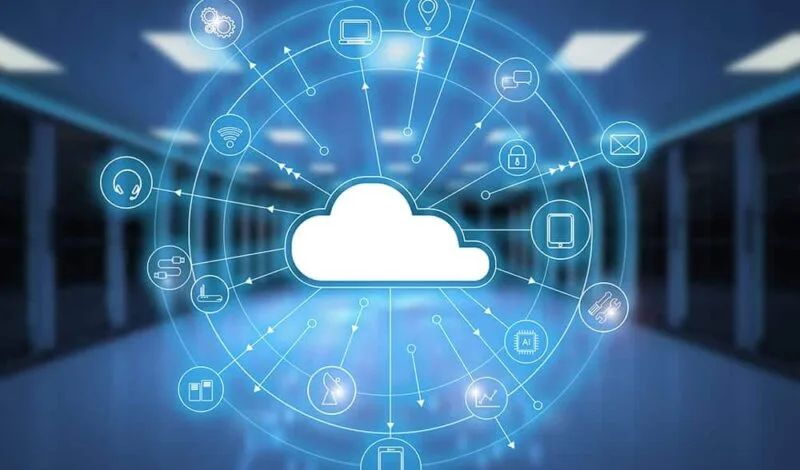
Cloud migration is transforming how organizations modernize their IT infrastructure — moving applications, data, and workloads to scalable, secure cloud platforms to achieve higher agility, performance, and cost efficiency.
👉 Read Official Google Cloud Guide🧱 From Monoliths to Cloud-Native Platforms
Cloud Migration 2.0 replaces rigid, fragile monolithic applications with dynamic, resilient, and continuously evolving cloud-native platforms. Legacy monoliths were built for fixed infrastructure, predictable workloads, and manual operations. They depend on tightly coupled codebases, centralized databases, and rigid deployment pipelines—making every change risky, slow, and expensive. In modern digital environments where scale, security, and speed are non-negotiable, this architecture simply cannot survive.
Modernized systems adopt cloud-native principles that transform applications into living platforms rather than static programs. Kubernetes orchestration becomes the backbone for workload management, enabling automated deployment, scaling, failover, and resource optimization across distributed environments. Applications shift toward event-driven services that respond dynamically to real-time business events instead of rigid batch processing cycles.
API-first architectures allow services to communicate cleanly, securely, and independently—making systems modular, extensible, and integration-friendly. Instead of building everything from scratch, organizations increasingly leverage managed cloud services for databases, messaging, identity, caching, and analytics, dramatically reducing operational overhead while improving reliability.
Security is embedded into the platform through zero-trust principles. Every service authenticates, authorizes, and encrypts communications continuously. Auto-scaling ensures that platforms expand and contract automatically with demand, eliminating over-provisioning while maintaining performance. Self-healing systems detect failures, restart services, reroute traffic, and maintain uptime without human intervention.
This architectural evolution turns applications into adaptive digital platforms capable of learning, scaling, protecting, and optimizing themselves continuously—unlocking long-term agility and cost efficiency.
Key Highlights
- Kubernetes automates deployment, scaling, and recovery
- Event-driven architectures enable real-time responsiveness
- API-first design ensures modular and extensible systems
- Managed cloud services reduce operational complexity
- Zero-trust security embeds continuous protection
- Auto-scaling and self-healing maintain uptime automatically
- Applications become resilient, adaptive platforms rather than brittle software
🏢 Who Needs Cloud Migration 2.0 — Right Now
Cloud Migration 2.0 is no longer a future initiative—it has become an immediate necessity for organizations operating mission-critical systems on aging architectures. Enterprises still running COBOL, mainframe, and large Java monoliths face increasing operational risk as developer talent becomes scarce, infrastructure costs continue to rise, and security requirements tighten. These systems were never designed for elastic scale, API-driven integration, or continuous delivery—yet modern digital business demands all three.
SaaS companies that initially launched on quick MVP architectures are now discovering that early technical shortcuts have hardened into long-term blockers. Slow deployments, brittle integrations, rising cloud bills, and limited ability to innovate are signs that modernization is overdue. Financial services platforms face mounting regulatory pressure, real-time risk modeling needs, and cybersecurity threats that legacy architectures simply cannot handle safely. Government systems struggle with outdated frameworks, security exposure, and manual workflows that hinder digital service delivery. Healthcare providers must modernize to support real-time patient data, interoperability, privacy mandates, and AI-driven care systems. Logistics and manufacturing platforms require resilient, event-driven systems to support predictive operations, automation, and supply-chain intelligence.
If your release cycles feel slow, infrastructure costs are unpredictable, outages are frequent, and scaling requires manual intervention—your cloud migration is not finished. You are running cloud infrastructure with data-center software.
🔮 The Future: Self-Modernizing Software
The future of cloud computing is not static systems—it is continuously evolving software that improves itself automatically. Next-generation platforms will integrate AI and automation deeply enough to refactor their own code, optimize their own infrastructure usage, and correct inefficiencies without waiting for human intervention. Software will no longer age—it will continuously adapt.
These systems will automatically detect architectural bottlenecks, inefficient queries, poorly performing microservices, and rising cloud costs. They will rewrite inefficient code paths, rebalance workloads across regions, optimize compute consumption, and apply performance improvements dynamically. Production behavior will feed directly into learning loops that refine system architecture in real time.
Cloud platforms will self-heal not only infrastructure failures but architectural weaknesses. Security policies will evolve automatically as threat patterns change. Compliance frameworks will adapt continuously. The distinction between “maintenance” and “innovation” will disappear—software will improve itself every day.
Organizations that adopt Cloud Migration 2.0 today are positioning themselves to operate in a future where platforms become autonomous, intelligent, and continuously optimized digital systems.
Key Highlights
- Software will continuously refactor and improve itself
- Cloud usage will be auto-optimized in real time
- Inefficient code will be rewritten automatically
- Systems will self-heal architectural bottlenecks
- Platforms will learn from production behavior
- Software will evolve continuously, not degrade
❓ Frequently Asked Questions (FAQ)
Traditional cloud migration focused on moving applications to cloud infrastructure without changing their internal architecture. Cloud Migration 2.0 modernizes the applications themselves—transforming monoliths into cloud-native, automated, observable, and self-optimizing platforms using AI and automation.
Yes. Modern AI-driven platforms analyze, refactor, modularize, and rebuild legacy applications automatically—preserving business logic while converting them into cloud-native architectures, eliminating the need for risky full rewrites.
No. While large enterprises benefit significantly, SaaS companies, startups, healthcare providers, financial platforms, logistics firms, and government systems can all adopt Cloud Migration 2.0 to improve scalability, security, cost efficiency, and release velocity.
Automation replaces manual guesswork with repeatable, testable, and validated pipelines. It continuously enforces security, compliance, observability, and infrastructure standards—reducing human error and making modernization predictable instead of risky.
Self-modernizing software refers to AI-enabled platforms that continuously optimize their architecture, code, performance, security, and cloud usage automatically—allowing systems to evolve, heal, and improve without waiting for manual upgrades.