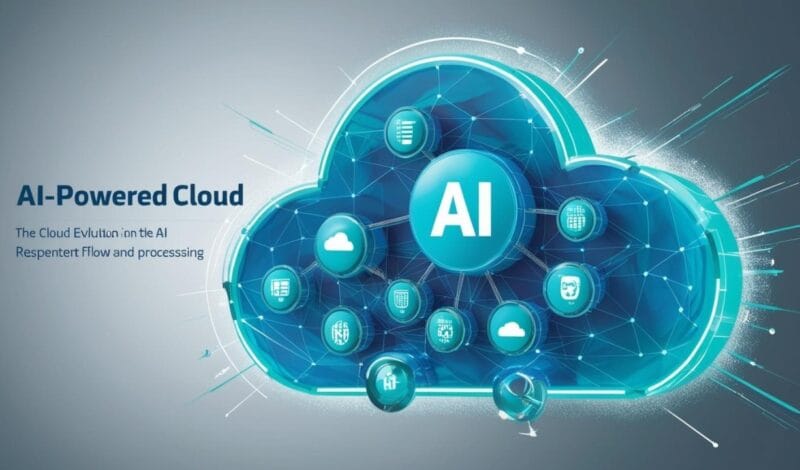
💰 AI-Driven Cloud Cost Optimization
“Smarter Clouds. Lower Bills. AI-Powered Efficiency.”
As businesses continue shifting to AWS, Azure, and Google Cloud, something unexpected has happened — cloud spending has become one of the largest operational costs.
Unused resources, over-provisioned servers, and unpredictable scaling often inflate bills without teams even noticing.
Traditional FinOps (Financial Operations) teams try to manage this manually, but the cloud grows too fast, too dynamically, and too unpredictably.
This is where AI-driven cost optimization comes in.
Machine learning models can analyse usage patterns, predict future demand, rightsize resources, and automate cloud cost governance — faster and more accurately than any human team.
2025 marks the beginning of AI-powered FinOps, where decisions are based not on guesswork but on real-time intelligence.
⚙️ How AI/ML Optimizes Cloud Costs
AI-driven cost optimization goes far beyond simply identifying unused servers or outdated disks. Instead, it acts like an intelligent financial advisor for your cloud infrastructure — learning your workload patterns, predicting future needs, and automatically adjusting resources long before humans even notice an issue. Traditional cloud management is reactive: teams check dashboards after bills spike. AI flips the model entirely, shifting organizations toward predictive, autonomous, and self-correcting cloud operations. With thousands of data points generated every second, AI models process information at a scale and speed no human team could match, uncovering inefficiencies and hidden waste that typically go unnoticed.
AI begins its work by performing real-time usage analysis, continuously observing CPU and memory utilization, I/O patterns, API request surges, storage growth rates, and even seasonal or weekly behavior. This high-level visibility allows AI to detect subtle patterns—perhaps your application always gets a traffic dip between 1–4 AM, or maybe your API usage spikes every Monday morning due to internal reports being processed. Instead of an engineer manually reading logs, AI identifies these patterns instantly and flags anomalies that could lead to outages or unnecessary costs.
Next, AI uses this data to deliver predictive scaling and forecasting, one of the most valuable aspects of cost optimization. Instead of waiting for users to overload a server, AI analyzes historical traffic data, user activity trends, and business cycles to anticipate demand in advance. It may detect that your e-commerce app always spikes during payday weekends or that storage needs increase at the end of every month due to backups. With this insight, AI scales infrastructure proactively, ensuring smooth performance while reducing unnecessary overprovisioning during quiet periods. For example, if your system experiences lower traffic after midnight, AI automatically reduces instances to a cheaper tier — saving money without sacrificing performance.
Another powerful capability is automatic rightsizing. Cloud waste often comes from oversized servers, oversized databases, and misallocated compute power. AI evaluates every instance, microservice, and container to understand its real performance needs. It identifies which VMs are running at 10% CPU, which databases can be moved to smaller tiers, or which Kubernetes pods are consuming more resources than they should. Then, instead of asking an engineer to manually adjust configurations, AI automatically applies the ideal sizing. This alone can reduce cloud costs by 30–60%, especially in large deployments.
AI further enhances efficiency through precision autoscaling, which replaces traditional reactive autoscaling policies. Instead of waiting for CPU spikes, AI anticipates changes milliseconds before they happen. It aggressively scales down when possible (saving money) and scales up instantly when needed (ensuring stability). This eliminates the risk of overprovisioning while guaranteeing smooth performance during peak loads — something legacy autoscaling systems fail to achieve.
Finally, AI performs automated cleanup, sweeping through your cloud environment to remove forgotten or idle resources that silently drain budgets. It detects orphaned storage volumes, unused load balancers, outdated snapshots, abandoned dev servers, unused Kubernetes pods, and dormant IP addresses. These items often account for 10–20% of cloud waste in most organizations. By cleaning them regularly, AI ensures your infrastructure stays lean, optimized, and cost-effective all year round.
☁️ The Rise of AI-Powered Cloud Operations (AIOps & AgentOps)
By 2025, these technologies are not just trends — they’re reshaping how IT teams, developers, and businesses operate in the cloud.
👉 Learn More🏢 How Companies Use AI to Reduce Cloud Costs
AI-driven cost optimization has become a central strategy for every modern cloud-driven business. From Big Tech giants to startups and SaaS companies, AI now plays a critical role in monitoring infrastructure, predicting demand, automating scaling decisions, and eliminating waste. What once required dedicated DevOps teams and expensive third-party tools is now handled seamlessly by intelligent AI systems integrated directly into cloud platforms. Below is a deeper look at how companies around the world — including Mystic Matrix — are using AI to slash cloud expenses while improving performance.
☁️ Amazon Web Services (AWS): Predictive Optimization at Scale
AWS leads the cloud market, and AI is at the core of its optimization tools. Services like Amazon DevOps Guru, Compute Optimizer, and CloudWatch ML Insights continuously analyze application metrics to identify inefficiencies. AWS uses machine learning to recommend more cost-effective EC2 instance families, helping businesses downgrade or upgrade resources based on usage patterns. Their predictive load models can anticipate traffic spikes before they occur, enabling proactive autoscaling instead of reactive adjustments. AWS also leverages AI to help companies choose the best Savings Plans or Reserved Instances based on historical usage — often saving 20–50% annually.
🔵 Microsoft Azure: Intelligent Cost Control and Predictive Resourcing
Azure integrates AI deeply into its cloud ecosystem through Azure Advisor, Azure Monitor, and Azure Cost Management + Billing. These tools provide real-time cost insights, detecting anomalies or unexpected spikes caused by misconfigurations. Azure’s predictive models automatically suggest VM resizing, recommending the ideal compute tier for your workload. Meanwhile, Azure Kubernetes Service (AKS) uses AI-based autoscaling to manage containerized applications, ensuring efficiency without compromising performance. Businesses using Azure benefit from its strong enterprise governance tools, making AI-driven cost savings easy to adopt in large organizations.
🔴 Google Cloud Platform (GCP): AI-First Cloud Optimization
Google Cloud heavily relies on machine learning to deliver cost savings. Its Recommender AI Engine evaluates project-level activity to suggest rightsizing options, underutilized resources, and free-to-clean items. The GKE (Google Kubernetes Engine) Intelligent Autoscaler dynamically adjusts node pools using ML, offering one of the smartest autoscaling systems in the industry. Google also leads in predictive cost analytics, forecasting future spending with impressive accuracy. This helps engineering and finance teams prepare budgets and prevent surprise cloud bills — a common problem for fast-growing companies.
🟣 Mystic Matrix Technologies: AI Optimization for Students, Startups & Modern Businesses
At Mystic Matrix, we are building next-generation AI-powered cost optimization tools designed to be accessible for students, developers, and growing businesses. Unlike large enterprises, smaller teams often lack cloud expertise — which is why our solutions focus on simplicity and automation.
We develop:
- AI-driven dashboards that visualize real-time cloud usage across compute, storage, and APIs
- Autonomous AI agents that identify oversized resources and recommend optimal instance changes
- Automated cleanup scripts that remove idle servers, unused disks, orphaned IPs, and outdated snapshots
- Cost-optimized cloud hosting for AI inference workloads, reducing GPU/CPU costs significantly
Our intelligent systems help clients avoid unnecessary spending, increase cloud visibility, and optimize resource allocation — without needing dedicated DevOps engineers. This is especially valuable for students learning cloud management, SaaS startups scaling rapidly, and digital agencies running multiple client workloads.
🎯 The Takeaway: AI Saves Money — Without Sacrificing Performance
Across AWS, Azure, GCP, and Mystic Matrix Technologies, the trend is the same:
AI is transforming cloud management from a reactive, manual process into a proactive, automated, and data-driven ecosystem.
For companies of every size, AI is no longer optional — it’s essential for staying competitive, efficient, and financially sustainable.
💼 How Businesses Can Implement AI-Driven Cloud Cost Optimization
Implementing AI-driven cost optimization is no longer a luxury reserved for big tech—it’s becoming a necessity for every cloud-dependent business. Whether you’re a startup paying unexpected AWS bills, a mid-sized company scaling fast, or an enterprise with complex multi-cloud environments, AI offers a simple, automated way to reduce cost while improving performance. The key is to approach implementation methodically and combine the right tools, practices, and automation.
The first step is to connect your cloud metrics—from AWS CloudWatch, Azure Monitor, or Google Cloud Operations—to a centralized monitoring system. This gives AI access to real-time data like CPU usage, memory consumption, network patterns, and storage growth. Once metrics are aggregated, businesses can feed logs and usage data into machine learning models that analyze patterns, detect inefficiencies, and evaluate where costs can be reduced. Many companies run these ML models using Python because of its strong ecosystem for predictive analytics and anomaly detection.
Next, businesses must set up automated alerts to catch anything unusual—unexpected spend spikes, suddenly idle servers, inefficient database calls, or anomalous bandwidth usage. These alerts act as early warning systems, preventing bill shocks at the end of the month. Once insights are available, the next step is to deploy autoscaling rules. Instead of manually adjusting servers, AI can automatically scale workloads up or down based on predicted demand, ensuring optimal performance at the lowest possible cost.
The real magic comes from AI agents. These autonomous assistants can analyze resource usage, identify oversized or outdated infrastructure, and suggest rightsizing options. In more advanced setups, AI agents can even apply changes automatically—switching to cheaper instance families, scaling storage tiers, or reconfiguring Kubernetes clusters for efficiency. Businesses can also set up automated scripts to clean up unused cloud resources, like orphaned volumes or old snapshots—areas where companies typically lose thousands every month.
Finally, governance is critical. Companies must define rules on spending limits, resource placement, instance types, and retention policies. Governance ensures AI works within safe boundaries while maintaining compliance, security, and operational control. When businesses combine AI-driven insights, proactive autoscaling, cleanup automation, and strong governance, they create a cloud environment that is efficient, predictable, and financially sustainable.
Even small teams—freelancers, student developers, or early-stage startups—can leverage these techniques to save thousands of dollars every month. With AI handling most of the monitoring and optimization, companies can redirect their energy toward innovation, product development, and scaling their vision—not fighting cloud bills.
💡 The Role of AI in Cloud Cost Optimization
As digital infrastructure continues to expand, cloud computing has become the foundation of nearly every modern business — from AI-driven startups to large-scale enterprise platforms. Companies rely on cloud services to power apps, workflows, analytics, automation, and global operations. But with this flexibility comes a growing challenge: cloud costs are volatile, unpredictable, and capable of escalating rapidly without warning. Manual monitoring and cost optimization strategies can no longer keep up with the dynamic nature of cloud usage, especially when thousands of microservices, containers, and workloads operate simultaneously.
This is where Artificial Intelligence (AI) fundamentally reshapes the landscape.
AI does not simply monitor cloud activity; it interprets it, learns from it, and acts on it autonomously. Instead of waiting for engineers to manually diagnose inefficiencies, AI takes a proactive approach — predicting future usage trends, automatically optimizing infrastructure, and eliminating waste before it becomes a financial burden. As a result, AI transforms cloud cost management from a reactive firefighting mission into a smart, automated, self-improving system.
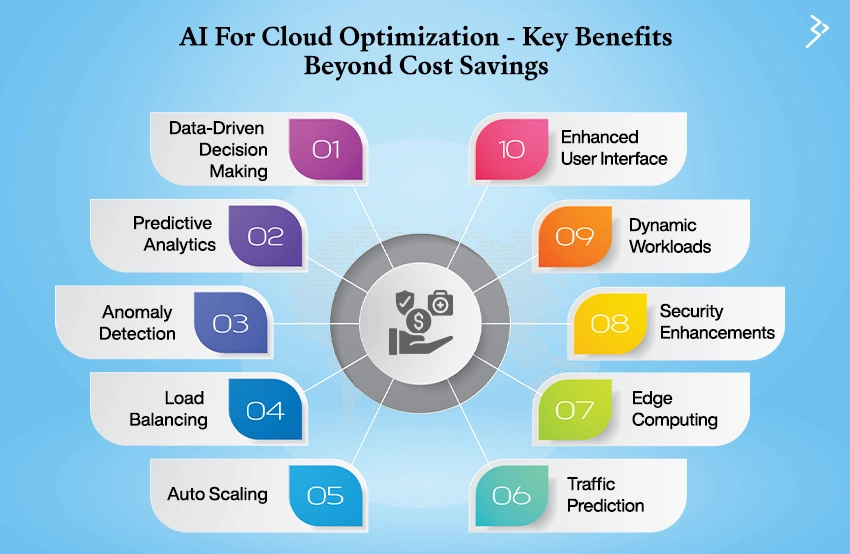
🔍 1. AI Brings Intelligent Visibility Into Cloud Usage
Traditional dashboards and monitoring tools provide visibility, but only in the form of raw data and static charts. They tell you what happened, but rarely explain why it happened or how to prevent it in the future. AI takes this a step further by analyzing thousands of simultaneous signals — CPU spikes, API bursts, latency changes, storage growth, network variations, and even user behavior patterns.
AI can correlate events across the entire system:
- Traffic increased due to a marketing campaign
- Memory usage spiked after a new deployment
- Storage grew because logs weren’t archived
Such insights enable faster decision-making and help organizations avoid unexpected cloud bills. AI surfaces inefficiencies that humans typically miss, such as low-traffic microservices consuming high-cost compute or databases running at only 5% utilization. This level of intelligence creates true operational awareness.
📈 2. Predictive Optimization: AI Plans the Future Before It Happens
One of AI’s greatest strengths is its ability to foresee cloud usage before it occurs. Based on historical data, seasonality, user activity cycles, and business trends, AI models accurately predict:
- Traffic surges
- Compute requirements
- Storage expansion
- Cost patterns
- High-demand hours vs. low-demand periods
This predictive power allows AI to automatically scale infrastructure before demand increases — ensuring smooth performance even during sudden surges. Conversely, during non-peak hours or weekends, AI intelligently scales down infrastructure to avoid paying for unused capacity.
Where human teams adjust infrastructure after something goes wrong, AI acts before it breaks, offering unmatched precision and cost efficiency.
⚙️ 3. Automated Rightsizing Based on Real Usage
One of the biggest contributors to cloud overspending is overprovisioning — running large servers or databases “just to be safe.” This leads to massive waste, as many workloads require only a fraction of the allocated resources.
AI solves this by continuously analyzing real performance metrics and automatically determining:
- Which virtual machines are oversized
- Which database tiers can be downgraded
- Which containers can be moved to lighter nodes
- Which services are underutilized
- How CPU and memory should be rebalanced
AI then applies the rightsizing without compromising performance.
This single feature alone can reduce cloud bills by 30–60%, making it one of the most impactful benefits of AI-driven optimization.
🔄 4. AI-Driven Autoscaling: Faster, Smarter, Proactive
Traditional autoscaling policies rely on simple rules:
“If CPU > 80%, add a server.”
This reactive approach often results in late scaling, performance issues, or unnecessary resource usage.
AI transforms autoscaling entirely:
- It predicts demand before it occurs
- Scales workloads just in time
- Prevents bottlenecks during spikes
- Scales down aggressively during quiet hours
- Ensures cost and performance balance
This type of intelligent autoscaling is essential for apps with fluctuating demand — such as gaming, streaming, fintech transactions, or e-commerce flash sales. AI ensures stability without expensive overprovisioning.
🧹 5. Autonomous Cleanup & Ongoing Cloud Maintenance
Over time, cloud environments accumulate “invisible waste” — leftover resources that linger long after they’re needed. These include:
- Unused load balancers
- Orphaned storage volumes
- Old snapshots
- Dead Kubernetes pods
- Idle dev/test machines
- Forgotten IP addresses
Manually tracking these across multiple cloud providers is nearly impossible.
AI solves the problem completely by monitoring the environment continuously and cleaning up unused resources automatically. This prevents slow, silent cost creep and keeps cloud infrastructure lean and efficient year-round.
❓ Frequently Asked Questions (FAQ)
AI analyzes real-time usage, predicts upcoming demand, and automatically rightsizes resources. It also removes unused assets and prevents overprovisioning — leading to significant cost savings without affecting performance.
No — even small startups and student-led projects can benefit. Many AI optimization tools work with minimal setup and allow smaller teams to cut costs while improving system reliability.
Not at all. Most cloud platforms (AWS, Azure, GCP) offer built-in AI-powered cost tools. Beginners can start with dashboards, while advanced users can train custom ML models for deeper automation.
Yes. With AgentOps-style automation, AI can detect anomalies, scale infrastructure, restart failing services, and clean up waste — often before anyone notices the issue.
Yes, as long as you set guardrails. Limit permissions, monitor AI actions, and review automated changes regularly. With proper governance, AI becomes a safe and powerful assistant — not a risk.